Why Faster DSA Onboarding Wins More Loan Business
For external agents, the time your onboarding app takes per customer is not a technical detail. It decides where they send their business.
In the first part of this series, we looked at a choice many organisations make without noticing: an onboarding app in which the agent captures documents, types in details, waits on checks, and stays until approval the old branch-does-everything model, moved onto a phone. This part looks at what that design costs, measured the way the people using it measure it: time per case.
The measure your partners use
A large share of loan and account onboarding is sourced through direct selling agents (DSAs) and other external partners. They are typically paid per case, and many work with more than one lender. Their decision about where to send a customer is practical: which app lets them finish properly and move on to the next one.
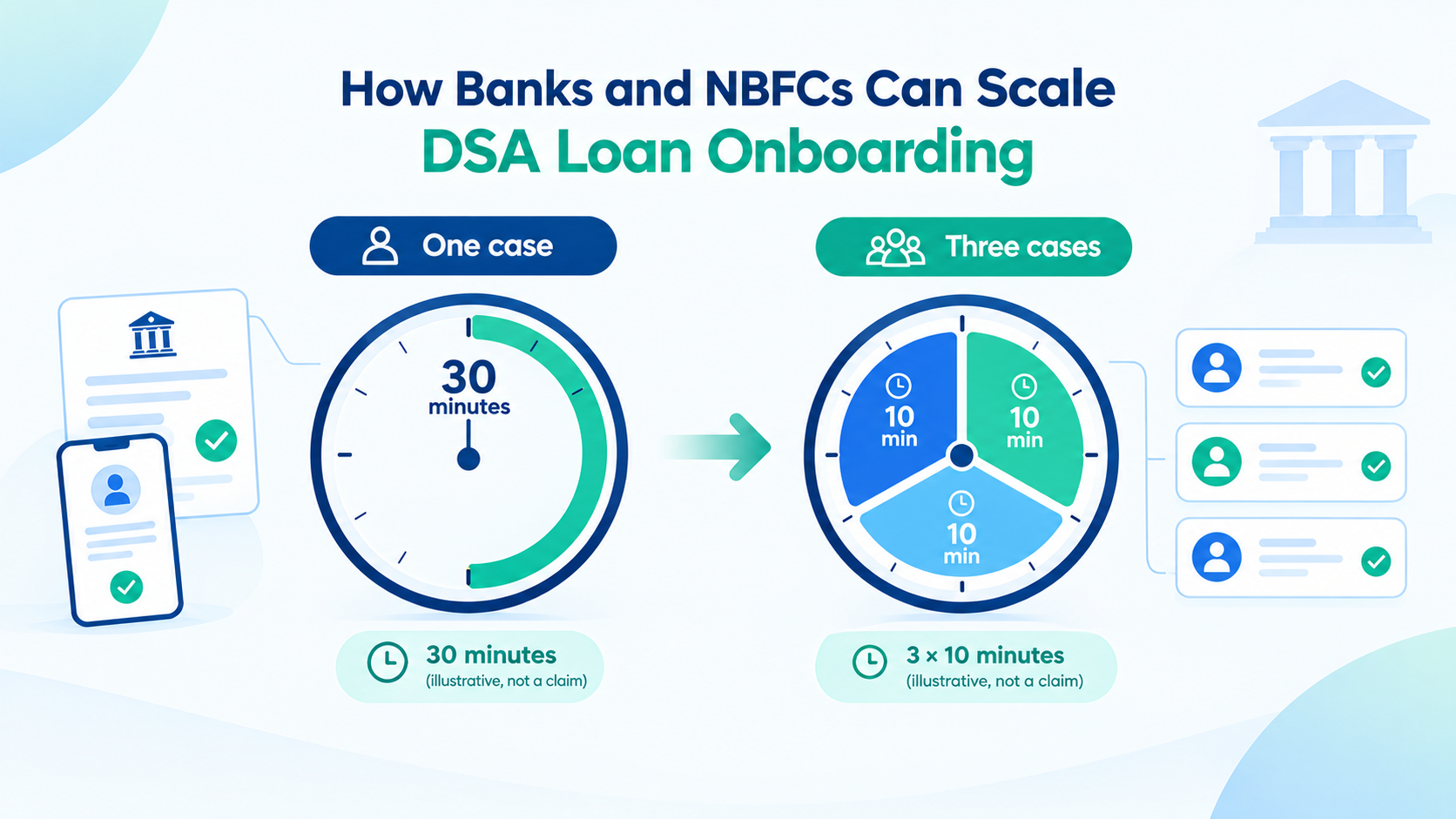
Take two apps as an illustration. In one, the agent’s session for a typical case takes thirty minutes. In the other, it takes ten. In the same half hour, the second app lets an agent complete three cases for every one completed on the first.
The real-world gap is narrower than that, because an agent’s day also includes travel and conversation that no app changes. But the session is the part the lender controls, and agents notice it quickly. They rarely tell you they have moved. Your volume from that partner simply starts to fall.
Where the minutes go
In a single-session app, most of the agent’s time is not spent with the customer. It goes into typing details that could have been read from the documents, and into waiting for each validation to return, for each external check to complete, for the application to move far enough that the agent is allowed to leave.
On an ordinary day that waiting is tolerable. It is also the part that grows fastest when things get busy.
What happens in festive season
Demand for retail and consumer loans rises sharply around festivals. Every lender’s systems are at their busiest at the same time and so are the external services they rely on for identity, credit and other checks.
When the app waits for each check before moving on, the slowest of those services sets the pace for every agent in the field. A check that returns in seconds on a quiet day can take far longer at peak or fail and need retrying. Sessions run long, some time out, and details get entered twice. Time per case can rise much faster than volume on exactly the days when the business matters most.
Let a slow check delay the case, not the person
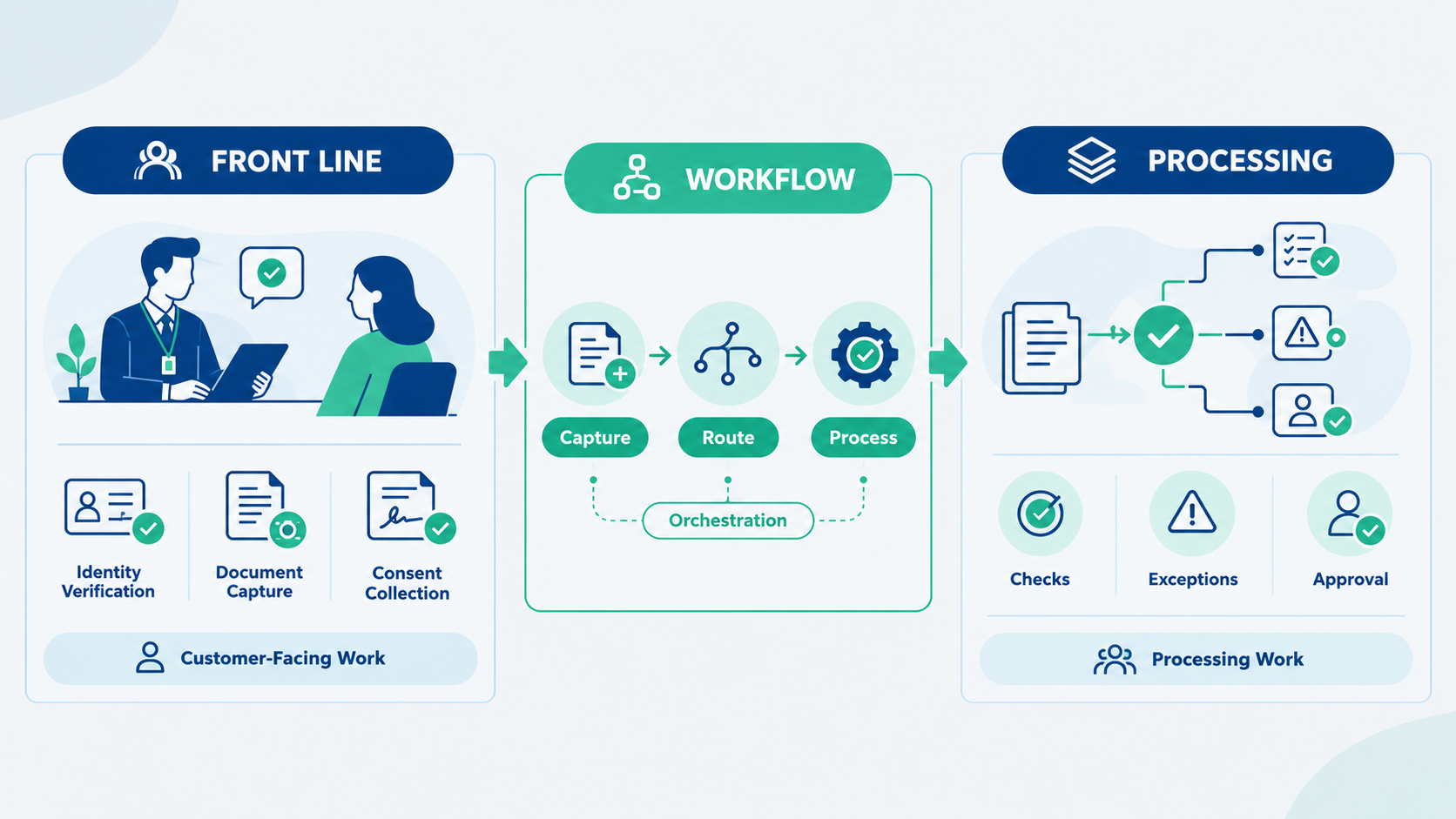
The answer follows from the principle in Part 1. The agent’s session should hold only what needs the customer present: capture, the checks that can be completed on the spot, and consent. Everything that depends on another system moves behind the agent and carries on after they have left.
A slow external service then delays a case sitting in a queue, rather than an agent sitting in front of a customer. The processing team, supported by automatic retries, works through the queue as services recover. And at peak, the organisation adds processing capacity in one place, instead of every agent in the field losing time at once. Keeping each case moving through the right steps, in the right order, with the right people able to see it, is the job of workflow orchestration.
What it asks for in return
This design gives up something real: the answer is no longer always available in the room. That has to be replaced with something the agent and the customer can rely on instead.
Agents need to see where each case stands without phoning anyone. Customers need to know what happens next. And when a document turns out to be missing, there has to be a clean way to ask for it without starting the application again. Without that visibility, the minutes saved in the session come back as follow-up calls. With it, agents trust the faster app enough to keep using it.
For products where an instant decision is the whole offer small, pre-approved loans, for example a single session can still be the right choice. For most onboarding at volume, it is not.
Frequently Asked Questions
What is DSA loan onboarding?
It is the process through which direct selling agents capture customer information, documents and consent for a lender.
Why does onboarding speed matter to DSAs?
DSAs are generally paid per case and may work with multiple lenders, so shorter sessions help them handle more customers.
How can banks and NBFCs reduce DSA onboarding time?
Keep customer-dependent tasks in the agent session and move slower external checks to automated back-office workflows.
Why does loan onboarding slow during festive seasons?
Higher demand places pressure on lenders and external identity and credit-check services, increasing delays and retries.
What role does workflow orchestration play?
It moves cases through the correct steps, manages retries and gives relevant teams visibility into progress.
When is single-session onboarding appropriate?
It can suit products where an immediate decision is central, such as some small, pre-approved loans.
Coming next
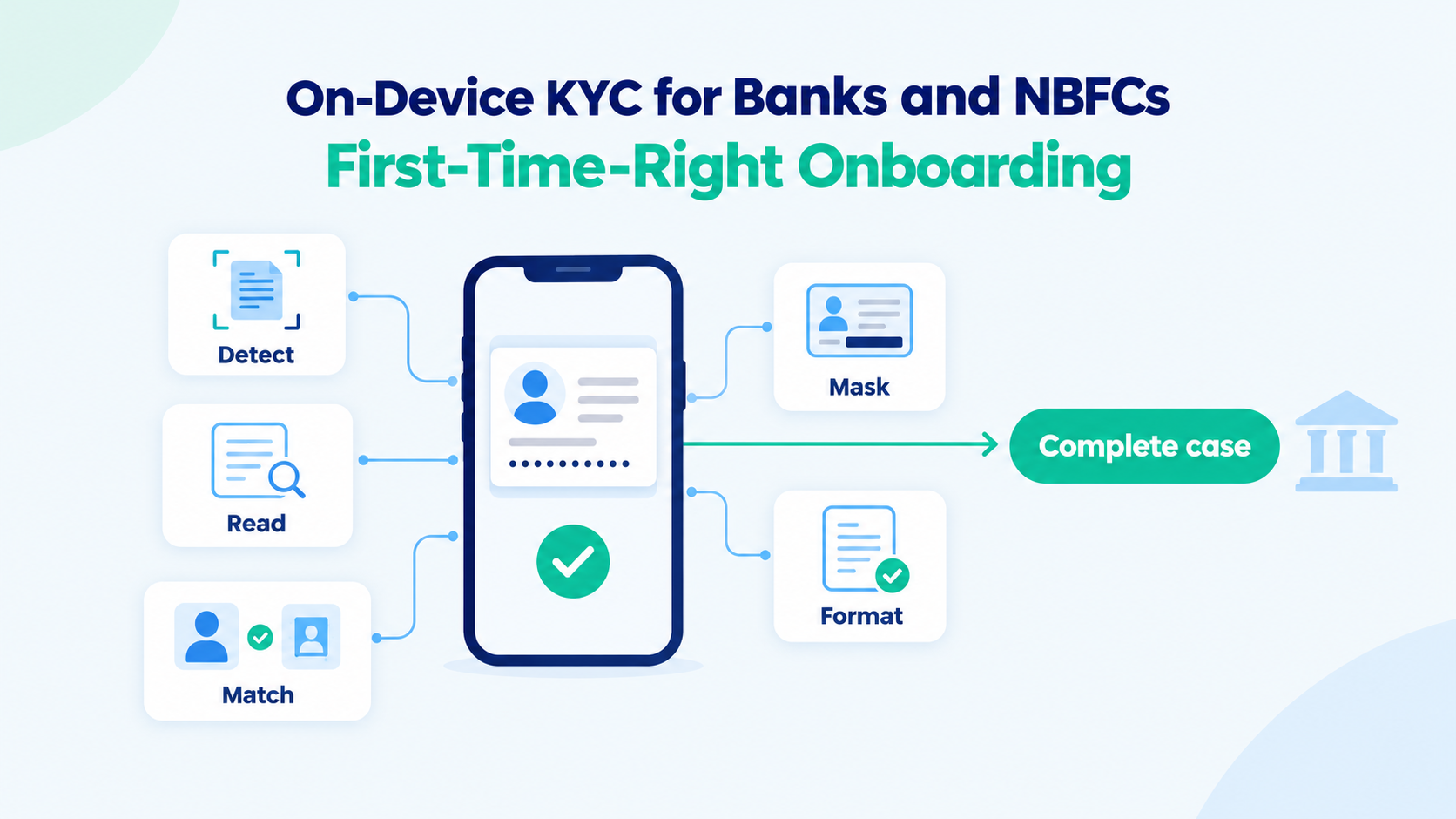
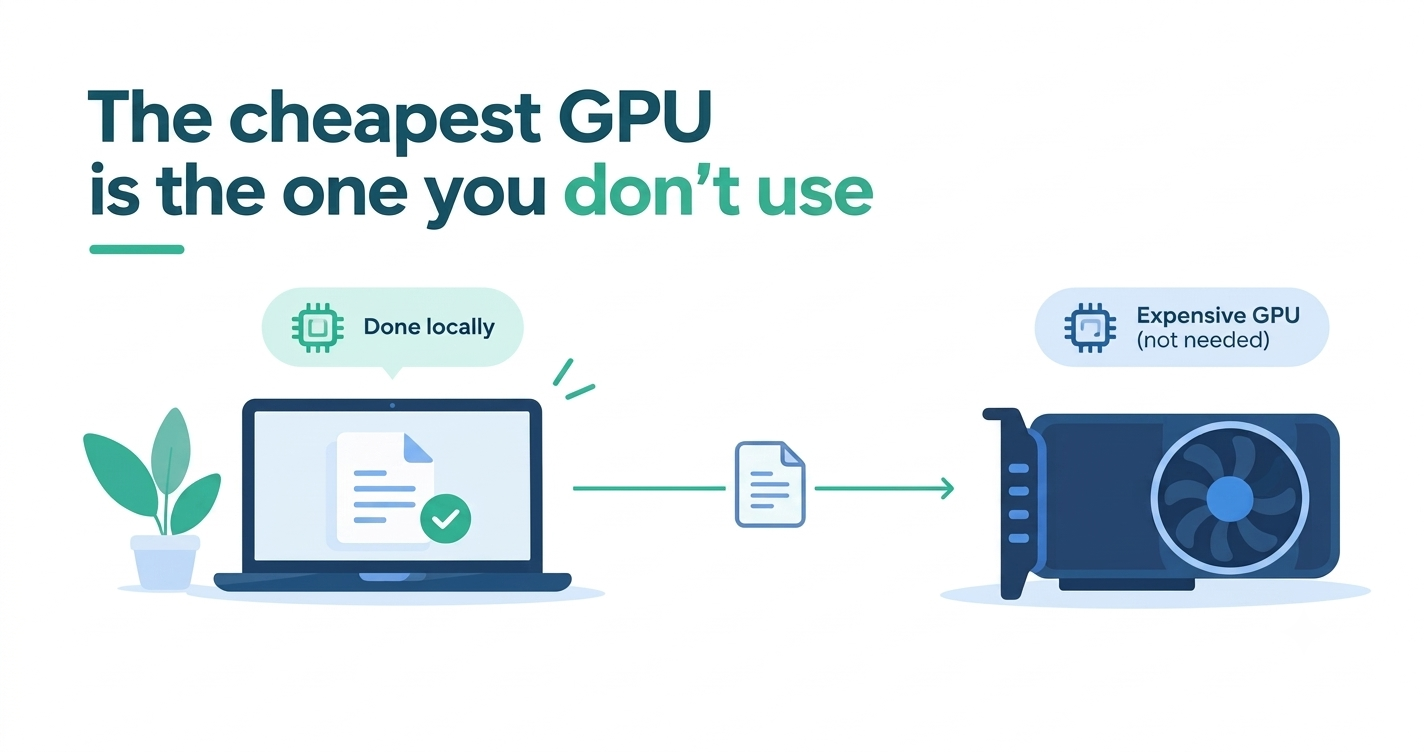
A ten-minute session depends on how much can be done on the device before anything is sent anywhere. In the final part of this series, we look at which checks can be completed on the phone itself and why that is often faster than sending the document to a server and waiting for a reply.