






%20--%3e%3cdefs%3e%3cstyle%3e%20.st0%20{%20fill:%20%2306526f;%20}%20%3c/style%3e%3c/defs%3e%3cg%3e%3cpath%20class='st0'%20d='M826.5,226l-15,76.4h-31s-9.1-55.1-9.1-55.1l-12.2,55.1h-30.7c-.5-16.5-5.2-33-9.8-48.8-2.5-8.4-4.7-19.1-10.6-25.6l23.6-.4,13.9,62.2,3.5-1.2,8.9-58.7,25.7-.4,13.7,60.3,12.2-63.8h16.9Z'/%3e%3cpath%20class='st0'%20d='M629.5,238.9c30.5-39.3,102.6,6.8,67.8,51.6-33,42.4-102.5-6.7-67.8-51.6ZM678.6,284c8.5-8.4,7.2-34-3.8-40.2-24.7-14-44.2,18.6-28.6,38,6.3,7.9,25.8,8.7,32.4,2.2h0Z'/%3e%3cpath%20class='st0'%20d='M551.3,226l1.6,15.7c8.6-5.8,5.8-15.2,16.2-16.5,52.7-6.7,31.9,45.5,37.4,77.9h-19.7v-50c0-3.7-3.3-4.8-3.2-8.2-5.7-2.6-21-3.9-25,2-4.4,6.7-.1,44.4-1.2,54.9l-1.7,1.3h-18.9l-.4-77.1h15,0Z'/%3e%3c/g%3e%3cg%3e%3cpath%20class='st0'%20d='M184.5,104.8h-39.6c-5.6-23.9-32.2-30.7-53.2-23.1-23.7,8.6-26.9,47.7-16.2,67.1,14.3,26,65.2,23.6,70.9-8.5h40.4c-15,86.2-145.4,84.8-155.1-4.4-5.5-50.9,21.3-94,76-93.2,40.6.6,68.8,21.9,76.7,62.2Z'/%3e%3cg%3e%3cpath%20class='st0'%20d='M369.5,45c.3.7.9.8,1.6.8,19.6,1.2,42.3.2,62.2,0,.5,0,.9,0,1.6,0,.5,0,1.1,0,1.6,0,.5,1,1.5.7,2.4.8,28.8,1.4,53.8,14.6,56.3,46.2,2.1,25.7-4.2,41.2-28,52.5l36.2,53.1-45.7-.3c-8.7-10.9-17.7-34.4-25.9-43.7l-1.6-2.4c-1.9-1.2-2.3-.6-3.9-.8-.5,0-1.1,0-1.6,0-5.3-.5-11.2,0-16.6.3-1.3,1-.8,13.6-.7,16.2,0,1.4,0,2.1,0,3.9.1,2.6.5,4.6.8,7.1-2.2,3.7-.2,9,0,12.6.1,2.4,0,4.7.8,7.1-1.3.2-2.7-.2-3.9,0h-3.1c-4.6.1-32,.6-33.9-.8v-.8c.8-5.2.8-10.4.8-15.7v-1.6c-.1-36.7.1-73.5,0-110.2,0-3.7,0-7.3,0-11v-1.6c0-2.8,1.1-10.1-1.6-9.4.6-2.8,1-1.5,2.4-2.4h0ZM447.2,80.7c-8.6-5.2-28.8-1.7-39.1-3.9l-.8,46.6c10.6-3.3,33.4,2,41.8-4.2,9.8-7.2,8.8-32.1-1.8-38.5h0Z'/%3e%3cpath%20class='st0'%20d='M408,191.4c-.2-3.6-2.2-8.9,0-12.6.5,4.1,2,8.5,0,12.6Z'/%3e%3cpath%20class='st0'%20d='M368.7,58.4c0,3.7,0,7.4,0,11-2.6.3-2.5-11.7,0-11Z'/%3e%3cpath%20class='st0'%20d='M367.1,47.4c2.7-.7,1.5,6.7,1.6,9.4-2.3,1.3-2-7.7-1.6-9.4Z'/%3e%3cpath%20class='st0'%20d='M407.3,171.7c0-1.8,0-2.6,0-3.9v3.9Z'/%3e%3cpath%20class='st0'%20d='M404.9,198.5c-2.5.4-2.2,0-3.1,0h3.1Z'/%3e%3cpath%20class='st0'%20d='M436.4,45.8c.9-.1,2.7-2.3,2.4.8-.9,0-1.9.2-2.4-.8Z'/%3e%3cpath%20class='st0'%20d='M431.7,154.4c-1.5-1.6-1.5-2.3-1.6-2.4l1.6,2.4Z'/%3e%3cpath%20class='st0'%20d='M369.5,45c1.5-.9,1.7-1.7,1.6.8-.6,0-1.3,0-1.6-.8Z'/%3e%3cpath%20class='st0'%20d='M434.8,45.8c-.7,0-1.1,0-1.6,0h1.6Z'/%3e%3cpath%20class='st0'%20d='M426.2,151.3c.4,2.5-2.1,2.3-1.6,0,.5,0,1.1,0,1.6,0Z'/%3e%3c/g%3e%3cpath%20class='st0'%20d='M368.7,179.6v1.6c-2.5.4-2.3-2.1,0-1.6Z'/%3e%3cpath%20class='st0'%20d='M347.8,190.3c.5,1.8,4,7.3,1.5,8.2l-39.1.8-9.1-36.7-63.8.5-6.3,36.9-44.8-.7,8.6-14.6,43.4-139.6,63.8,1.9c13.7,48.3,31.7,95.3,46,143.4h0ZM291.5,133.1l-16.9-56.6c-1.1-1.8-6.9-1.6-8-1-4.3,2.4-14.4,50.9-18.3,58.4l43.3-.8h0Z'/%3e%3cg%3e%3cpath%20class='st0'%20d='M629,57.1c5.1,3,17.9,14.1,21.3,18.8.8,1.1.6,3.2,1.4,4.6.5.8,1.9-.2,2,0,.7,1.2,1.4,7.2,2,8.7.4,1.1,2.8,1.4,3.2,2.7,7.8,23.7,5,60.2-11.7,80.2-32,38.3-82,24.9-125.8,27.3l-.8-155c36.2,3.6,75.3-6.2,108.3,12.9h0ZM559.2,156.8c0,.6-.2.6,0,2.4.2,1.6-.6,4.9.7,5.9,23-1.2,52.9.7,61.4-26.1,4.6-14.7,3.2-34.7-7.9-46.2-14.3-14.8-35.1-8.8-53.5-12.8-.6,25.5-1.8,51.3-.7,76.8h0Z'/%3e%3cpath%20class='st0'%20d='M559.2,159.1c-.2-1.7,0-1.7,0-2.4v2.4Z'/%3e%3c/g%3e%3cg%3e%3cg%3e%3cpath%20class='st0'%20d='M688.3,199.3l.8-93.6-15,7.1-1.5-27.9,51,.8c-3.6,7.9,3.8,113.6-1.9,113.6h-33.5,0Z'/%3e%3cpath%20class='st0'%20d='M695.2,38.9c19.4-3.5,28.6,5.9,24.4,25.2-2.8,13.2-34.2,12.7-36-.6-1.4-10.2-.3-22.4,11.6-24.6Z'/%3e%3c/g%3e%3cpath%20class='st0'%20d='M756,84.4v-33l33.8,1.6-1.6,31.5,33.1.4v25.2l-33,1.6,1.5,58.5,31.1,1.6.4,29.1c-25.3-1.7-53.1,2.8-64.4-25.5l-1-64.4-17.2-.9v-23.6c0-.3-1.1-1.2-.8-2h18.1,0Z'/%3e%3c/g%3e%3c/g%3e%3c/svg%3e)
Need to mask an existing archive, not just new documents? For crores of already-stored KYC images across your DMS, LOS or core-banking attachments, see bulk Aadhaar masking for legacy document archives: on-premise remediation with a per-page audit trail.
Handling personal documents in financial services carries one hard obligation: the Aadhaar number must not sit readable in your systems. RBI's 2019 amendment to the KYC Master Direction requires Aadhaar masking (redaction) when an Aadhaar card is accepted for KYC and IRDAI's 2019 guidance extends the duty to insurers and their agencies. For what the DPDP Rules add for documents you already hold, see whether the DPDP Act requires masking Aadhaar in a legacy archive. Extrieve's Aadhaar masking SDK and API handle this automatically.
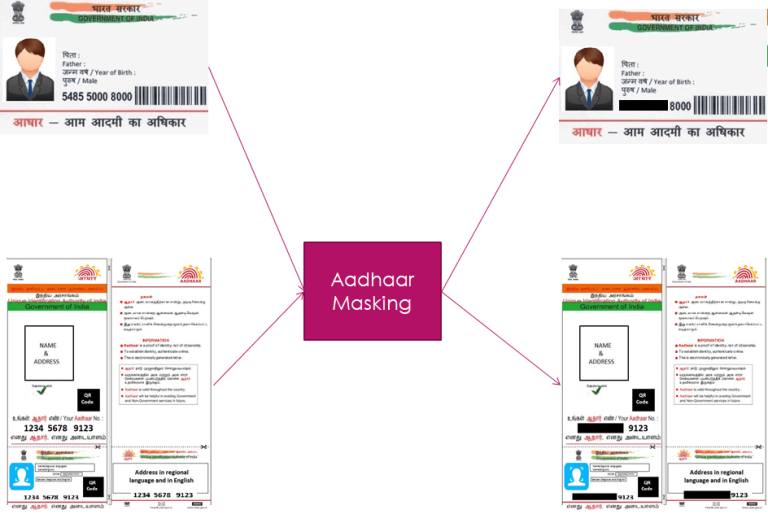
As per UIDAI, masking means covering the first eight digits of the number, in physical or digital form, with only the last four left visible. Doing that by hand, page after page, is where operations teams struggle and where automation earns its keep.
What is Aadhaar masking?
Aadhaar masking hides the first 8 digits of the 12-digit number and keeps the last 4 visible, with every other detail on the card untouched. Extrieve’s Aadhaar Redaction Module takes an image file in and returns the masked file, using Splicer image segmentation and OCR.
Aadhaar masking is one module of SplicerAI, Extrieve's document data extraction SDK for KYC and identity documents. See the SplicerAI overview for ID detection, document classification and data extraction.
%20--%3e%3cdefs%3e%3cstyle%3e%20.st0%20{%20fill:%20%2355b5d5;%20}%20%3c/style%3e%3c/defs%3e%3cpath%20class='st0'%20d='M46.5,50H6.1c-.5,0-.9.4-.9.9s.4.9.9.9h40.4c.5,0,.9-.4.9-.9s-.4-.9-.9-.9ZM46.5,46.5H6.1c-.5,0-.9.4-.9.9s.4.9.9.9h40.4c.5,0,.9-.4.9-.9s-.4-.9-.9-.9ZM51.8,35.1c-.5,0-.9.4-.9.9v16.6c0,1.4-1.2,2.6-2.6,2.6H4.4c-1.4,0-2.6-1.2-2.6-2.6v-27.9c0-1.4,1.2-2.6,2.6-2.6h27.3c.5,0,.9-.4.9-.9s-.4-.9-.9-.9H4.4c-2.4,0-4.4,2-4.4,4.4v27.9c0,2.4,2,4.4,4.4,4.4h43.9c2.4,0,4.4-2,4.4-4.4v-16.6c0-.5-.4-.9-.9-.9ZM46.9,9c-7,0-12.7,5.7-12.7,12.7s.2,2.6.6,3.9h-6.1c-.5,0-.9.4-.9.9s.4.9.9.9h6.8c.3.6.7,1.2,1,1.7h-7.8c-.5,0-.9.4-.9.9s.4.9.9.9h9.3c2.3,2.2,5.4,3.6,8.8,3.6,7,0,12.7-5.7,12.7-12.7,0-7-5.7-12.7-12.7-12.7ZM46.9,32.6c-6,0-10.9-4.9-10.9-10.9s4.9-10.9,10.9-10.9,10.9,4.9,10.9,10.9-4.9,10.9-10.9,10.9ZM8.4,44.6c.3,0,.7.2,1.2.2h10.4c2.2,0,4.4-1.9,4.4-4.4v-10.4c0-2.4-2-4.4-4.4-4.4h-10.4c-2.4,0-4.4,2-4.4,4.4v10.4c0,2,1.3,3.7,3.2,4.2ZM9.7,43c.7-2.2,2.8-3.7,5.1-3.7s4.4,1.6,5.1,3.7h-10.2ZM11.5,34.2c0-1.8,1.5-3.3,3.3-3.3s3.3,1.5,3.3,3.3-1.5,3.3-3.3,3.3-3.3-1.5-3.3-3.3ZM7,29.9c0-1.4,1.2-2.6,2.6-2.6h10.4c1.4,0,2.6,1.2,2.6,2.6v10.4c0,.9-.4,1.6-1.1,2.1-.6-1.9-2-3.4-3.7-4.3,1.2-.9,2-2.4,2-4.1,0-2.8-2.3-5.1-5.1-5.1s-5.1,2.3-5.1,5.1.8,3.1,2,4.1c-1.7.8-3.1,2.4-3.7,4.3-.6-.5-1.1-1.2-1.1-2.1v-10.4ZM51.3,18.6l-6.1,6.1c0,0-.2,0-.3,0l-2.4-2.4c-.3-.3-.9-.3-1.2,0-.3.3-.3.9,0,1.2l2.4,2.4c.4.4.9.6,1.4.6s1-.2,1.4-.6l6.1-6.1c.3-.3.3-.9,0-1.2-.3-.3-.9-.3-1.2,0ZM46.5,39.5h-17.7c-.5,0-.9.4-.9.9s.4.9.9.9h17.7c.5,0,.9-.4.9-.9s-.4-.9-.9-.9ZM46.5,43h-17.7c-.5,0-.9.4-.9.9s.4.9.9.9h17.7c.5,0,.9-.4.9-.9s-.4-.9-.9-.9Z'/%3e%3c/svg%3e)

%20--%3e%3cdefs%3e%3cstyle%3e%20.st0%20{%20fill:%20%2355b5d5;%20}%20%3c/style%3e%3c/defs%3e%3cg%20id='_x31_438_x2C__Arrow_x2C__Compress_x2C__Interaction_x2C__Interface_x2C__User'%3e%3cg%3e%3cpath%20class='st0'%20d='M17.3,31.8h24.9c2.7,0,5-2.2,5-5s-2.2-5-5-5h-24.9c-2.7,0-5,2.2-5,5s2.2,5,5,5ZM17.3,24.3h24.9c1.4,0,2.5,1.1,2.5,2.5s-1.1,2.5-2.5,2.5h-24.9c-1.4,0-2.5-1.1-2.5-2.5s1.1-2.5,2.5-2.5Z'/%3e%3cpath%20class='st0'%20d='M29.1,19.1c.1,0,.3.1.4.2,0,0,0,0,0,0,.1,0,.3,0,.4,0,0,0,0,0,0,0,.2,0,.3,0,.4-.2.2-.1-.1.1,5.2-5.1.5-.5.5-1.3,0-1.8-.5-.5-1.3-.5-1.8,0l-2.9,2.9V3.1c0-.7-.6-1.2-1.2-1.2s-1.2.6-1.2,1.2v11.9l-2.9-2.9c-.5-.5-1.3-.5-1.8,0s-.5,1.3,0,1.8c5.3,5.3,5,5,5.2,5.2h0Z'/%3e%3cpath%20class='st0'%20d='M42.3,34.2h-24.9c-2.7,0-5,2.2-5,5s2.2,5,5,5h24.9c2.7,0,5-2.2,5-5s-2.2-5-5-5ZM42.3,41.7h-24.9c-1.4,0-2.5-1.1-2.5-2.5s1.1-2.5,2.5-2.5h24.9c1.4,0,2.5,1.1,2.5,2.5s-1.1,2.5-2.5,2.5Z'/%3e%3cpath%20class='st0'%20d='M30.5,46.9c-.4-.3-.9-.3-1.3,0-.2.1.2-.2-5.2,5.2-.5.5-.5,1.3,0,1.8.5.5,1.3.5,1.8,0l2.9-2.9v11.9c0,.7.6,1.2,1.2,1.2s1.2-.6,1.2-1.2v-11.9l2.9,2.9c.5.5,1.3.5,1.8,0,.5-.5.5-1.3,0-1.8-5.3-5.3-5-5-5.2-5.2h0Z'/%3e%3c/g%3e%3c/g%3e%3c/svg%3e)
%20--%3e%3cdefs%3e%3cstyle%3e%20.st0%20{%20fill:%20%2355b5d5;%20}%20%3c/style%3e%3c/defs%3e%3cpath%20class='st0'%20d='M54,31.1h-30c-1-4-5-6.4-9-5.3-2.6.7-4.7,2.7-5.3,5.3h-4c-1,0-1.9.8-1.9,1.9s.8,1.9,1.9,1.9h4c1,4,5,6.4,9,5.3,2.6-.7,4.7-2.7,5.3-5.3h30c1,0,1.9-.8,1.9-1.9s-.8-1.9-1.9-1.9ZM16.8,36.7c-2.1,0-3.7-1.7-3.7-3.7s1.7-3.7,3.7-3.7,3.7,1.7,3.7,3.7c0,2.1-1.7,3.7-3.7,3.7Z'/%3e%3cpath%20class='st0'%20d='M54,12.6h-5.8c-1-4-5-6.4-9-5.3-2.6.7-4.7,2.7-5.3,5.3H5.6c-1,0-1.9.8-1.9,1.9s.8,1.9,1.9,1.9h28.1c1,4,5,6.4,9,5.3,2.6-.7,4.7-2.7,5.3-5.3h5.8c1,0,1.9-.8,1.9-1.9s-.8-1.9-1.9-1.9ZM41,18.1c-2.1,0-3.7-1.7-3.7-3.7s1.7-3.7,3.7-3.7,3.7,1.7,3.7,3.7-1.7,3.7-3.7,3.7Z'/%3e%3cpath%20class='st0'%20d='M54,49.7h-9.6c-1-4-5-6.4-9-5.3-2.6.7-4.7,2.7-5.3,5.3H5.6c-1,0-1.9.8-1.9,1.9s.8,1.9,1.9,1.9h24.4c1,4,5,6.4,9,5.3,2.6-.7,4.7-2.7,5.3-5.3h9.6c1,0,1.9-.8,1.9-1.9s-.8-1.9-1.9-1.9ZM37.2,55.3c-2.1,0-3.7-1.7-3.7-3.7s1.7-3.7,3.7-3.7,3.7,1.7,3.7,3.7-1.7,3.7-3.7,3.7Z'/%3e%3c/svg%3e)
%20--%3e%3cdefs%3e%3cstyle%3e%20.st0%20{%20fill:%20%2355b5d5;%20}%20%3c/style%3e%3c/defs%3e%3cpath%20class='st0'%20d='M58,40.9c-1,0-1.9.8-1.9,1.9v13.1H3.7v-22.5h20.6c1,0,1.9-.8,1.9-1.9s-.8-1.9-1.9-1.9H3.7v-7.5h20.6c1,0,1.9-.8,1.9-1.9s-.8-1.9-1.9-1.9H3.7c-2.1,0-3.7,1.7-3.7,3.7v33.7c0,2.1,1.7,3.7,3.7,3.7h52.4c2.1,0,3.7-1.7,3.7-3.7v-13.1c0-1-.8-1.9-1.9-1.9Z'/%3e%3cpath%20class='st0'%20d='M16.9,40.9h-7.5c-1,0-1.9.8-1.9,1.9s.8,1.9,1.9,1.9h7.5c1,0,1.9-.8,1.9-1.9s-.8-1.9-1.9-1.9Z'/%3e%3cpath%20class='st0'%20d='M58.8,13l-13.1-5.6c-.5-.2-1-.2-1.5,0l-13.1,5.6c-.7.3-1.1,1-1.1,1.7v7.5c0,10.3,3.8,16.3,14,22.2.3.2.6.2.9.2s.6,0,.9-.2c10.2-5.9,14-11.9,14-22.2v-7.5c0-.7-.4-1.4-1.1-1.7ZM56.2,22.2c0,8.6-2.9,13.4-11.2,18.4-8.4-5-11.2-9.8-11.2-18.4v-6.3l11.2-4.8,11.2,4.8v6.3Z'/%3e%3cpath%20class='st0'%20d='M51.7,18.9c-.8-.6-2-.5-2.6.3l-5.9,7.4-2.3-3.5c-.6-.9-1.7-1.1-2.6-.5-.9.6-1.1,1.7-.5,2.6l3.7,5.6c.3.5.9.8,1.5.8h0c.6,0,1.1-.3,1.5-.7l7.5-9.4c.6-.8.5-2-.3-2.6Z'/%3e%3c/svg%3e)
%20--%3e%3cdefs%3e%3cstyle%3e%20.st0%20{%20fill:%20%2355b5d5;%20}%20%3c/style%3e%3c/defs%3e%3cpath%20class='st0'%20d='M27.5,41.9v-1.3c-3.2-.1-5.6-2.6-5.6-5.7s1.1-2.4,2.4-2.4,2.4,1.1,2.4,2.4.6,1,1.2,1h3.5c1,0,1.9-.6,1.9-1.8v-1.4c0-1-.8-1.9-1.9-1.9h-2.2c-3.6,0-6.6-3-6.6-6.7v-.9c0-1.8.7-3.4,2-4.7.9-.8,1.9-1.4,3.1-1.7v-1.6c0-1.3,1.1-2.4,2.4-2.4s2.4,1.1,2.4,2.4v1.5c2.7.5,4.8,2.9,4.8,5.7s-1.1,2.4-2.4,2.4-2.4-1.1-2.4-2.4-.6-1.1-1.2-1.1h-2c-1.1,0-1.9.8-1.9,1.8v.9c0,1.1.9,2,1.9,2h2.2c1.8,0,3.4.7,4.7,1.9,1.3,1.2,2,2.9,2,4.7v1.4c0,3.3-2.4,6-5.6,6.4v1.4c0,1.3-1.1,2.4-2.4,2.4s-2.4-1.1-2.4-2.4h0ZM59.5,31.7c-.9-2.1-2.8-3.4-5.1-3.4h-5V5.2c0-1.3-1.1-2.4-2.4-2.4H13.1c-1.3,0-2.4,1.1-2.4,2.4v23.1h-5.6c-2.2,0-4.2,1.3-5.1,3.4-.9,2.1-.4,4.4,1.2,6l23.6,23.4c1.4,1.4,3.2,2.1,5,2.1s3.6-.7,5-2.1l7.6-7.6c.9-.9.9-2.4,0-3.3-.9-.9-2.4-.9-3.3,0l-7.6,7.6c-.9.9-2.4.9-3.3,0L4.6,34.3c-.3-.3-.3-.6-.2-.8,0-.2.3-.5.7-.5h7.9c1.3,0,2.4-1.1,2.4-2.4V7.6h29.3v23.1c0,1.3,1.1,2.4,2.4,2.4h7.3c.5,0,.6.3.7.5,0,.2.1.5-.2.8l-7.7,7.7c-.9.9-.9,2.4,0,3.3.9.9,2.4.9,3.3,0l7.7-7.7c1.6-1.6,2-3.9,1.2-6h0Z'/%3e%3c/svg%3e)
%20--%3e%3cdefs%3e%3cstyle%3e%20.st0%20{%20fill:%20%2306526f;%20}%20%3c/style%3e%3c/defs%3e%3cpath%20class='st0'%20d='M28,14c-1.3,0-2.4.8-2.8,2h-5.2c-.3,0-.6.1-.8.4l-3,4c-.1.2-.2.4-.2.6v3.2c-1.2.4-2,1.5-2,2.8s1.3,3,3,3,3-1.3,3-3-.8-2.4-2-2.8v-2.9l2.5-3.3h4.7c.4,1.2,1.5,2,2.8,2s3-1.3,3-3-1.3-3-3-3ZM17,28c-.6,0-1-.4-1-1s.4-1,1-1,1,.4,1,1-.4,1-1,1ZM28,18c-.6,0-1-.4-1-1s.4-1,1-1,1,.4,1,1-.4,1-1,1ZM44.2,15c-.5,0-.9.2-1.1.6,0,0-2,4.5-11.2,5.4-4.2.4-7.2,2-9,4.7-2.3,3.6-1.5,8.1-1.1,9.9l-1.2.5c-.2,0-.3.2-.4.4l-2.4,3.7c-.2,0-.5-.1-.7-.1-1.7,0-3,1.3-3,3s1.3,3,3,3,3-1.3,3-3-.2-1.3-.6-1.8l2.3-3.4,1.4-.6c2.9,1.5,5.6,2.2,8,2.2s3.8-.5,5.4-1.5c8.3-5,8.4-21.2,8.4-21.9s-.3-.9-.8-1ZM17,44c-.6,0-1-.4-1-1s.4-1,1-1,1,.4,1,1-.4,1-1,1ZM35.5,36.2c-2.6,1.6-6,1.6-10,0l4.9-2.2c.1,0,.3-.2.4-.3l1.4-1.8c.3,0,.5.1.8.1,1.7,0,3-1.3,3-3s-1.3-3-3-3-3,1.3-3,3,.2,1.2.5,1.7l-1.2,1.5-5.7,2.5c-.4-1.7-.8-5.2.9-8,1.4-2.1,3.9-3.4,7.5-3.7,5.7-.6,8.9-2.4,10.7-4-.4,4.8-1.9,13.9-7.3,17.2ZM32,29c0-.6.4-1,1-1s1,.4,1,1-.4,1-1,1-1-.4-1-1ZM56,34c2.2,0,4-1.8,4-4s-1.8-4-4-4h-6v-3h6c2.2,0,4-1.8,4-4s-1.8-4-4-4h-6c0-2.8-2.2-5-5-5v-6c0-2.2-1.8-4-4-4s-4,1.8-4,4v6h-3v-6c0-2.2-1.8-4-4-4s-4,1.8-4,4v6h-3v-6c0-2.2-1.8-4-4-4s-4,1.8-4,4v6c-2.8,0-5,2.2-5,5h-6c-2.2,0-4,1.8-4,4s1.8,4,4,4h6v3h-6c-2.2,0-4,1.8-4,4s1.8,4,4,4h6v3h-6c-2.2,0-4,1.8-4,4s1.8,4,4,4h6c0,2.8,2.2,5,5,5v6c0,2.2,1.8,4,4,4s4-1.8,4-4v-6h3v6c0,2.2,1.8,4,4,4s4-1.8,4-4v-6h3v6c0,2.2,1.8,4,4,4s4-1.8,4-4v-6c2.8,0,5-2.2,5-5h6c2.2,0,4-1.8,4-4s-1.8-4-4-4h-6v-3h6ZM50,17h6c1.1,0,2,.9,2,2s-.9,2-2,2h-6v-4ZM50,28h6c1.1,0,2,.9,2,2s-.9,2-2,2h-6v-4ZM10,43h-6c-1.1,0-2-.9-2-2s.9-2,2-2h6v4ZM10,32h-6c-1.1,0-2-.9-2-2s.9-2,2-2h6v4ZM10,21h-6c-1.1,0-2-.9-2-2s.9-2,2-2h6v4ZM39,4c0-1.1.9-2,2-2s2,.9,2,2v6h-4v-6ZM28,4c0-1.1.9-2,2-2s2,.9,2,2v6h-4v-6ZM17,4c0-1.1.9-2,2-2s2,.9,2,2v6h-4v-6ZM21,56c0,1.1-.9,2-2,2s-2-.9-2-2v-6h4v6ZM32,56c0,1.1-.9,2-2,2s-2-.9-2-2v-6h4v6ZM43,56c0,1.1-.9,2-2,2s-2-.9-2-2v-6h4v6ZM45,48H15c-1.7,0-3-1.3-3-3V15c0-1.7,1.3-3,3-3h30c1.7,0,3,1.3,3,3v20h-5c-.3,0-.6.2-.8.4l-3.4,4.7c-.3,0-.5-.1-.8-.1-1.7,0-3,1.3-3,3s1.3,3,3,3,3-1.3,3-3-.2-1.2-.5-1.7l3.1-4.3h4.5v8c0,1.7-1.3,3-3,3ZM39,43c0,.6-.4,1-1,1s-1-.4-1-1,.4-1,1-1,1,.4,1,1ZM56,39c1.1,0,2,.9,2,2s-.9,2-2,2h-6v-4h6Z'/%3e%3c/svg%3e)
%20--%3e%3cdefs%3e%3cstyle%3e%20.st0%20{%20fill:%20%2306526f;%20}%20%3c/style%3e%3c/defs%3e%3cpath%20class='st0'%20d='M58,28.7c-.4-.5-1-.8-1.6-.9.4-.6.5-1.2.5-1.9,0-1.8-1.6-3.3-3.5-3.3h-6.7v-10.1c0-2.2-1.8-4-4-4s-4,1.8-4,4v2.7c0,.7-.1,1.3-.4,1.9-5-.2-9-4.3-9-9.3v-1.2c0-.8-.6-1.4-1.4-1.4h-14.6c-.8,0-1.4.6-1.4,1.4v1c0,5.1-4.2,9.3-9.3,9.3h-.2c-.8,0-1.4.6-1.4,1.4v17c0,10.8,8.8,19.7,19.7,19.7s14.6-4.5,17.9-11.4h11.8c.8,0,1.5-.3,2.1-.9.5-.5.8-1.3.8-2,0-.4,0-.7-.2-1.1h.4c1.8,0,3.4-1.5,3.5-3.3,0-.7-.2-1.4-.5-1.9,1.4-.4,2.5-1.7,2.6-3.2,0-.9-.3-1.8-.9-2.5ZM20.7,53.2c-9.9,0-18-8.1-18-18v-16.7c6.1,0,11-5,11-11v-.7h14v.9c0,5.6,4.1,10.2,9.5,10.9-.2.2-.4.4-.7.5l-4.6,2.9c-.4.3-.9.4-1.4.4h-1c-.3-1-1.3-1.8-2.4-1.8h-4.7c-1.1,0-2,.7-2.4,1.7h-4.2c-1.2,0-2.2,1-2.2,2.2v14.6c0,1.2,1,2.2,2.2,2.2h4v8.3c-7.6-.4-13.7-6.8-13.7-14.5v-14.1c5.8-.4,10.5-5.2,10.7-11.1h3v7.5c0,.5.4.8.8.8s.8-.4.8-.8v-8.3c0-.5-.4-.8-.8-.8h-4.7c-.5,0-.8.4-.8.8v.4c0,5.4-4.4,9.9-9.9,9.9s-.8.4-.8.8v14.9c0,8.9,7.3,16.2,16.2,16.2s.8-.4.8-.8v-7.6c.2,0,.4,0,.6,0h5c.8,0,1.6-.4,2-1l.9.5c1,.6,2.1.8,3.2.8h3.4c-3.1,5.9-9.2,9.7-16,9.7ZM19.8,39.7h-4c-.3,0-.5-.2-.5-.5v-14.6c0-.3.2-.5.5-.5h4v15.6ZM55.5,32.7h-6.6c-.5,0-.8.4-.8.8s.4.8.8.8h4.6c.5,0,.9.2,1.2.5.3.3.5.8.5,1.2,0,.9-.8,1.6-1.8,1.6h-3s0,0,0,0c0,0,0,0,0,0h-1.5c-.5,0-.8.4-.8.8s.4.8.8.8h1.5s0,0,0,0c0,0,0,0,0,0,.6,0,1.1.5,1.1,1.1,0,.3-.1.6-.3.8-.2.2-.5.4-.9.4h-17.2c-.8,0-1.6-.2-2.4-.6l-1.2-.7v-1.9c0-.5-.4-.8-.8-.8s-.8.4-.8.8v2.1c0,.5-.4.8-.8.8h-5c-.3,0-.6-.3-.6-.6v-17.5c0-.5.4-.8.8-.8h4.7c.5,0,.8.4.8.8v11.3c0,.5.4.8.8.8s.8-.4.8-.8v-10.3h.9c.8,0,1.6-.2,2.3-.7l4.6-2.9c1.9-1.2,3-3.3,3-5.5v-2.7c0-1.2,1-2.3,2.3-2.3s2.3,1,2.3,2.3v10.3c0,.8.6,1.4,1.4,1.4h7c.9,0,1.7.7,1.8,1.6,0,.5-.2.9-.5,1.2-.3.3-.8.5-1.2.5h-4.6c-.5,0-.8.4-.8.8s.4.8.8.8h6.7c.5,0,.9.2,1.2.5.3.3.5.8.5,1.2,0,.9-.8,1.6-1.8,1.6Z'/%3e%3c/svg%3e)
%20--%3e%3cdefs%3e%3cstyle%3e%20.st0%20{%20fill:%20%2306526f;%20}%20%3c/style%3e%3c/defs%3e%3cg%20id='Return_On_Investment'%3e%3cpath%20class='st0'%20d='M28.1,50.5c-9.5,0-17.1-7.7-17.1-17.1,0-9.5,7.7-17.1,17.1-17.1,9.5,0,17.1,7.7,17.1,17.1,0,9.5-7.7,17.1-17.1,17.1h0ZM28.1,18.5c-8.2,0-14.9,6.7-14.9,14.9,0,8.2,6.7,14.9,14.9,14.9,8.2,0,14.9-6.7,14.9-14.9h0c0-8.2-6.7-14.9-14.9-14.9h0Z'/%3e%3cpath%20class='st0'%20d='M30.7,32.8c-1.3-.6-3.5-.6-4.3-.9-2.8-1.4-1.3-4.4,1.7-4.4,1.1,0,2.2.5,2.9,1.4.3.5,1,.7,1.6.3.5-.3.7-1,.3-1.5-.9-1.2-2.2-2-3.7-2.3v-1.3c0-.6-.5-1.1-1.1-1.1s-1.1.5-1.1,1.1v1.2c-4.9.9-6,6.4-1.6,8.6,1.3.6,3.6.6,4.3,1,3.1,1.4,1.5,4.5-1.6,4.5-1.2,0-2.3-.5-2.9-1.4-.3-.5-1-.7-1.6-.3-.5.3-.7,1-.4,1.5.9,1.3,2.2,2.1,3.7,2.4v1.3c0,.6.5,1.1,1.1,1.1s1.1-.5,1.1-1.1v-1.2c4.9-.9,6.1-6.5,1.4-8.7h0Z'/%3e%3cpath%20class='st0'%20d='M25.3,3.9L19.6.2c-.5-.3-1.2-.2-1.6.3-.3.5-.2,1.2.3,1.5l3.3,2.1C8.8,7.2-.3,18.7-.2,31.9c0,.6.5,1.1,1.1,1.1s1.1-.5,1.1-1.1c0-12.2,8.4-22.8,20.3-25.5l-2.3,3.5c-.3.5-.2,1.2.3,1.6.5.3,1.2.2,1.5-.3l3.7-5.7c.3-.5.2-1.2-.3-1.6h0Z'/%3e%3cpath%20class='st0'%20d='M41.2,54.2c-10.5,6.2-24,4.2-32.3-4.8l4.2.2c.6,0,1.1-.5,1.2-1.1,0-.6-.4-1.1-1.1-1.2l-6.8-.4c-.6,0-1.1.5-1.2,1.1l-.4,6.8c0,.6.4,1.1,1.1,1.2s1.1-.4,1.2-1.1l.2-3.9c9,9.7,23.5,11.8,34.9,5.1.5-.3.7-1,.4-1.5-.3-.5-1-.7-1.5-.4Z'/%3e%3cpath%20class='st0'%20d='M58.6,38.2l-3.5,1.8c3.9-12.6-1.6-26.3-13.1-32.8-.5-.3-1.2-.1-1.5.4-.3.5-.1,1.2.4,1.5,10.6,6,15.6,18.7,12,30.3l-1.9-3.7c-.3-.6-1-.8-1.5-.5-.5.3-.8,1-.5,1.5l3.1,6c.3.5,1,.8,1.5.5l6-3.1c.6-.3.8-1,.5-1.5-.3-.5-1-.8-1.5-.5h0Z'/%3e%3c/g%3e%3c/svg%3e)